
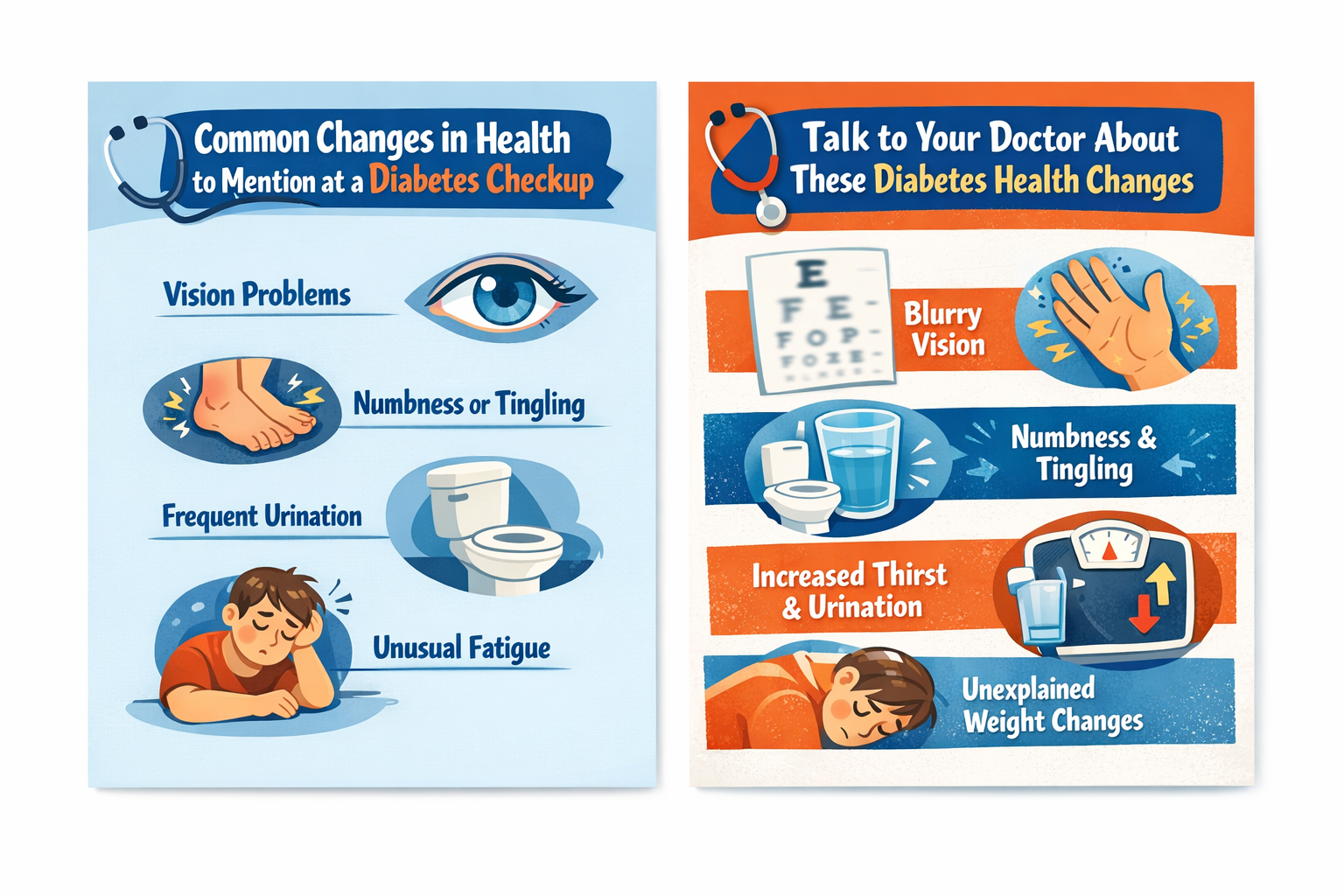
Article Title: Common Changes in Health That May Be Worth Mentioning at a Diabetes Checkup
When people begin to notice unusual changes in how they feel from day to day, they often wonder whether those changes are important enough to bring up during a doctor’s visit. In many cases, symptoms can have different explanations, but it is still useful to discuss them clearly and calmly with a healthcare professional. If diabetes is a concern, being prepared to describe recent physical changes can help support a more productive conversation.
One of the most commonly discussed changes is increased thirst. Some people notice that they feel thirsty more often than usual, even when their normal water intake has not changed significantly. This can sometimes happen alongside more frequent urination, including waking up during the night more often than before. On their own, these symptoms do not confirm any diagnosis, but they may be relevant details to mention during a medical appointment.
Another topic that may come up is unexplained fatigue. Many people feel tired because of stress, busy schedules, lack of sleep, or other everyday factors. However, if low energy becomes more noticeable, lasts for a longer period of time, or seems unusual compared with a person’s normal routine, it may be something worth discussing. A doctor may ask when the fatigue started, whether it gets worse after meals, and whether it is affecting work, exercise, or concentration.
Changes in appetite can also be important. Some individuals notice feeling hungrier than usual, while others may not feel quite the same interest in food as before. Weight changes may also be relevant, especially if they happen without a clear reason. A doctor may want to know whether the change was gradual or sudden and whether it happened together with other symptoms. Keeping notes before the appointment can be helpful for answering these questions more accurately.
Vision changes are another example of something that should not be ignored. Blurry vision can sometimes be caused by eye strain, stress, or other short-term factors, but it is still important to mention it, especially if it happens more than once or seems to come and go. A doctor may decide that more evaluation is needed or may suggest further checks depending on the overall picture.
Skin-related concerns can also be part of the conversation. Some people notice slower healing of minor cuts, recurring skin irritation, or discomfort that seems unusual for them. These symptoms may have many possible causes, but they can still be useful to mention as part of a full health discussion. The more complete the information, the easier it may be for a doctor to decide what to look into next.
It is also a good idea to talk about how long the symptoms have been present. A single day of feeling tired or thirsty may not mean much on its own, but symptoms that continue for weeks or become more noticeable over time deserve attention. Doctors often look for patterns rather than isolated events, so details about timing can make the discussion more useful.
Instead of trying to self-diagnose before the appointment, many people find it more helpful to focus on observation. Writing down symptoms, when they happen, and what seems to make them better or worse can make the visit more organized and less stressful. This approach keeps the conversation practical and fact-based.
A doctor may ask additional questions about daily routine, diet, stress levels, recent illness, medications, and sleep. These questions are meant to build a broader understanding of overall health, not just one symptom. That is why honest and detailed answers are often more valuable than trying to guess what the “right” answer should be.
If diabetes is suspected, the goal of the appointment is usually not to jump to conclusions, but to understand whether further evaluation makes sense. A calm and informed conversation about symptoms and early signs can be an important first step toward getting appropriate medical guidance.