
Article Title: Everyday Habits to Review With a Doctor When Diabetes Is a Concern
When people prepare for a doctor’s appointment related to possible diabetes, they often focus mainly on symptoms or test results. However, daily habits are also an important part of the conversation. A doctor may ask about food choices, movement, sleep, stress, and routine patterns because these details can offer valuable context for understanding overall health. Thinking about lifestyle in advance can help make the appointment more useful.
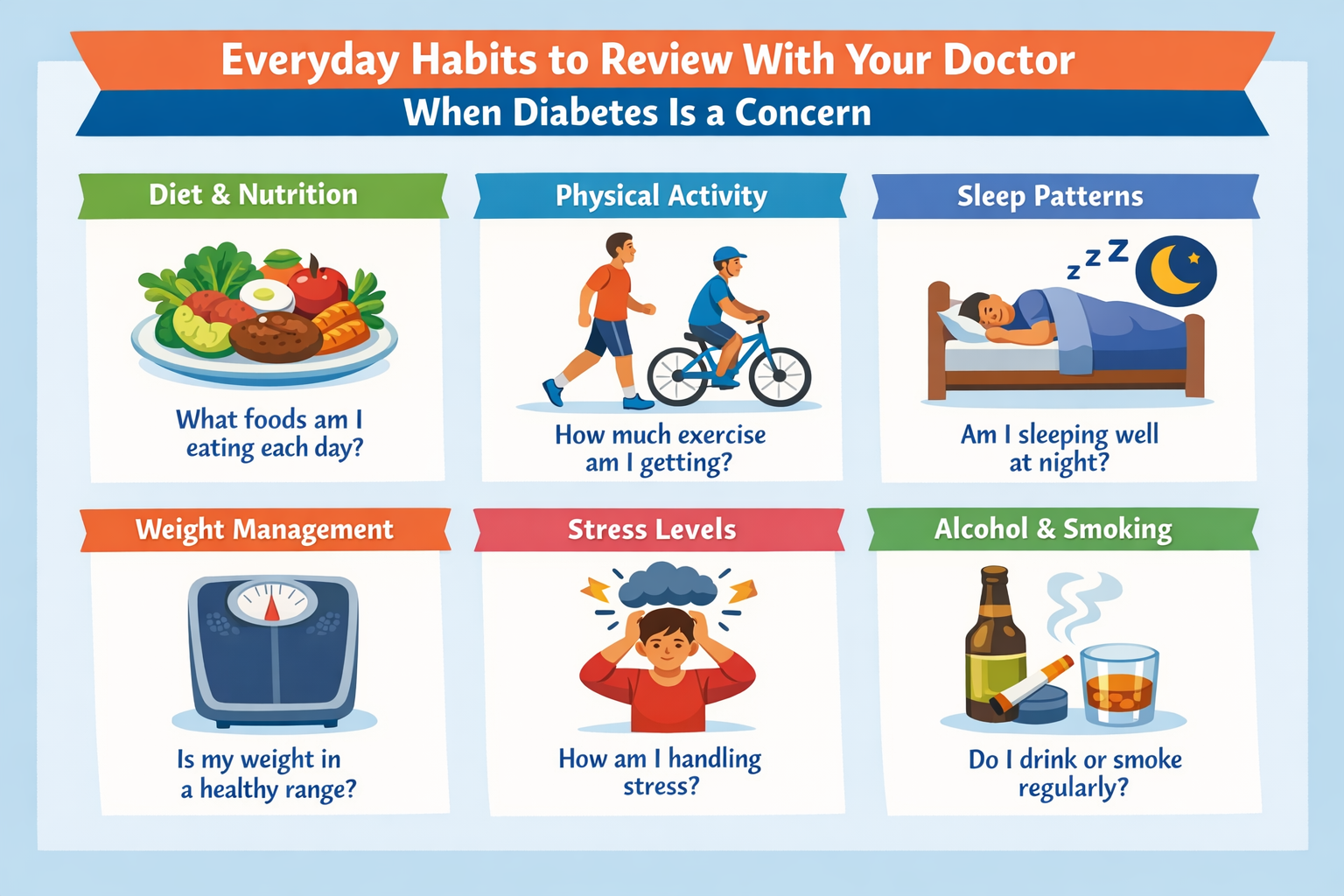
One of the most common discussion points is eating habits. This does not usually mean describing every meal in detail. Instead, doctors often want to understand broader patterns. For example, they may ask whether meals are eaten at regular times, whether there is frequent snacking, whether highly processed foods are common, or whether appetite has changed recently. Being honest about real habits is more helpful than trying to present an ideal version of a routine.
It may also be useful to discuss portion size habits and how hunger changes throughout the day. Some people notice they feel hungry shortly after eating, while others skip meals and then eat large amounts later. These patterns may matter in a broader health discussion. A doctor may also ask about sugary drinks, convenience foods, and how often meals are prepared at home. The goal is not criticism but better understanding.
Physical activity is another important topic. A doctor may ask whether a person has a regular exercise routine, but everyday movement matters too. Walking, standing time, stair use, and long periods of sitting can all be part of the discussion. Someone who does not do formal exercise may still have an active lifestyle, while someone else may spend most of the day inactive because of work demands. These details help create a more realistic picture of daily health habits.
Sleep can be just as important as diet and exercise. Poor sleep can affect energy, appetite, mood, and daily functioning. A doctor may ask how many hours of sleep a person usually gets, whether sleep feels restful, and whether there are frequent interruptions during the night. If someone has recently noticed worsening fatigue or irregular sleep, mentioning that during the appointment can be helpful.
Stress is another factor that may come up in conversation. Work pressure, caregiving responsibilities, financial concerns, and emotional strain can all affect daily habits. Stress may influence eating patterns, sleep quality, motivation for activity, and general well-being. Doctors often find it useful to understand whether stress has recently increased and whether it seems to be affecting health behaviors.
Hydration and beverage habits can also be part of the discussion. Some people may notice that they are drinking more than usual, while others may rely heavily on sweetened drinks or multiple caffeinated beverages each day. These patterns are worth mentioning because they may help explain symptoms or guide broader lifestyle conversations.
A doctor may also ask about tobacco use, alcohol use, and medications or supplements. These details can affect general health and may influence recommendations or decisions about monitoring. It is helpful to mention these clearly so the doctor has accurate information rather than an incomplete picture.
Preparing for this kind of conversation does not have to be complicated. A person can simply spend a few days noticing their routine before the appointment. Writing down meal timing, movement habits, sleep quality, and any changes in thirst, hunger, or energy can make it easier to answer questions without forgetting important details.
It can also be helpful to ask the doctor which daily habits matter most in the individual situation. Rather than trying to change everything at once, some people benefit from asking which one or two areas deserve the most attention first. This can make the conversation feel more practical and less overwhelming.
Lifestyle and daily health habits are not separate from medical care. They are often part of the foundation of a meaningful health discussion. When diabetes is a concern, reviewing these everyday patterns with a doctor can support a more complete evaluation and may help guide informed, realistic next steps.