
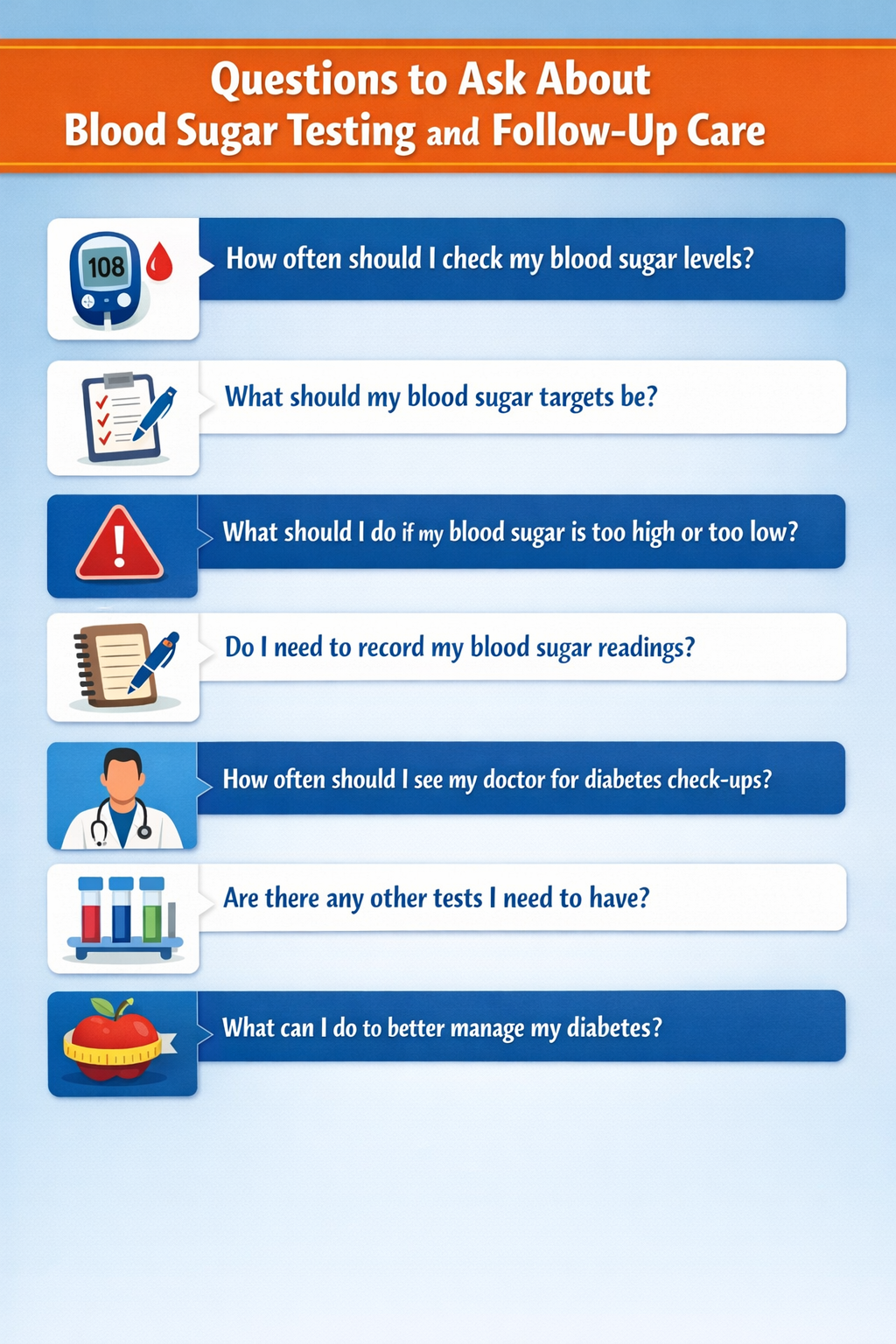
Article Title: Questions to Ask About Blood Sugar Testing and Follow-Up Care
For many people, one of the most uncertain parts of a doctor’s visit is understanding which tests may be discussed and what those tests are meant to show. If diabetes is a concern, asking informed questions about medical evaluation can make the conversation clearer and less stressful. A healthcare appointment often feels more manageable when a person knows what kind of information to request and why it matters.
A good starting point is to ask which tests may be considered and what each one is used for. Rather than focusing on technical details right away, it can be helpful to ask the doctor to explain the purpose of any recommended blood sugar test in simple language. Patients often benefit from understanding whether a test reflects current blood sugar levels, longer-term patterns, or a need for additional monitoring.
Another useful question is whether any preparation is needed before testing. Some tests may require fasting, while others may not. Understanding how to prepare can help avoid confusion and ensure that the appointment goes more smoothly. If a patient is unsure whether they can eat, drink coffee, exercise, or take medication beforehand, it is better to ask directly rather than make assumptions.
It is also helpful to ask how results are interpreted. Medical test results can feel overwhelming when they are presented only as numbers. Asking what a result means in practical terms may help make the information easier to understand. For example, a person may want to know whether the result falls within a typical range, whether it suggests the need for repeat testing, or whether it should be viewed together with symptoms and medical history.
In some cases, one test may not answer every question. That is why a doctor may recommend follow-up evaluation or repeat testing. Patients can ask whether one result is enough for conclusions to be made or whether a broader review is needed. This helps create realistic expectations and may reduce unnecessary anxiety about a single appointment.
It may also be useful to ask whether other general health measures should be reviewed at the same time. Depending on the situation, a doctor may want to look at blood pressure, weight trends, cholesterol, kidney-related markers, or other aspects of metabolic health. These additional checks are often part of understanding overall wellness rather than focusing on one issue in isolation.
Another important topic is timing. Patients may want to ask when results will be available, whether they will be discussed during the same visit, and what happens next if something needs more attention. Knowing whether there will be a phone call, a follow-up appointment, or a written report can make the process feel more organized.
It can also help to ask what kinds of symptoms or changes should be tracked after the appointment. A doctor may suggest keeping note of thirst, fatigue, appetite, weight changes, or daily routines. Tracking patterns over time may provide more useful information than relying only on memory during future visits.
People sometimes worry that asking too many questions will take up too much time, but clear communication is usually helpful for both patient and doctor. Writing down a short list of questions before the visit can make the conversation more efficient. A few focused questions about testing, preparation, interpretation, and follow-up can go a long way toward improving understanding.
Another reasonable question is whether lifestyle adjustments should be discussed immediately or after test results are reviewed. In some cases, a doctor may prefer to talk first about general health habits and then revisit the conversation once more information is available. In other cases, basic changes in routine may be worth discussing right away. Asking for guidance can help avoid guesswork.
The goal of medical evaluation is not just to order tests, but to place results into context. Symptoms, history, daily habits, and lab findings often work together to form a complete picture. By asking thoughtful questions about blood sugar testing and follow-up care, patients can take an active and informed role in their healthcare discussions.